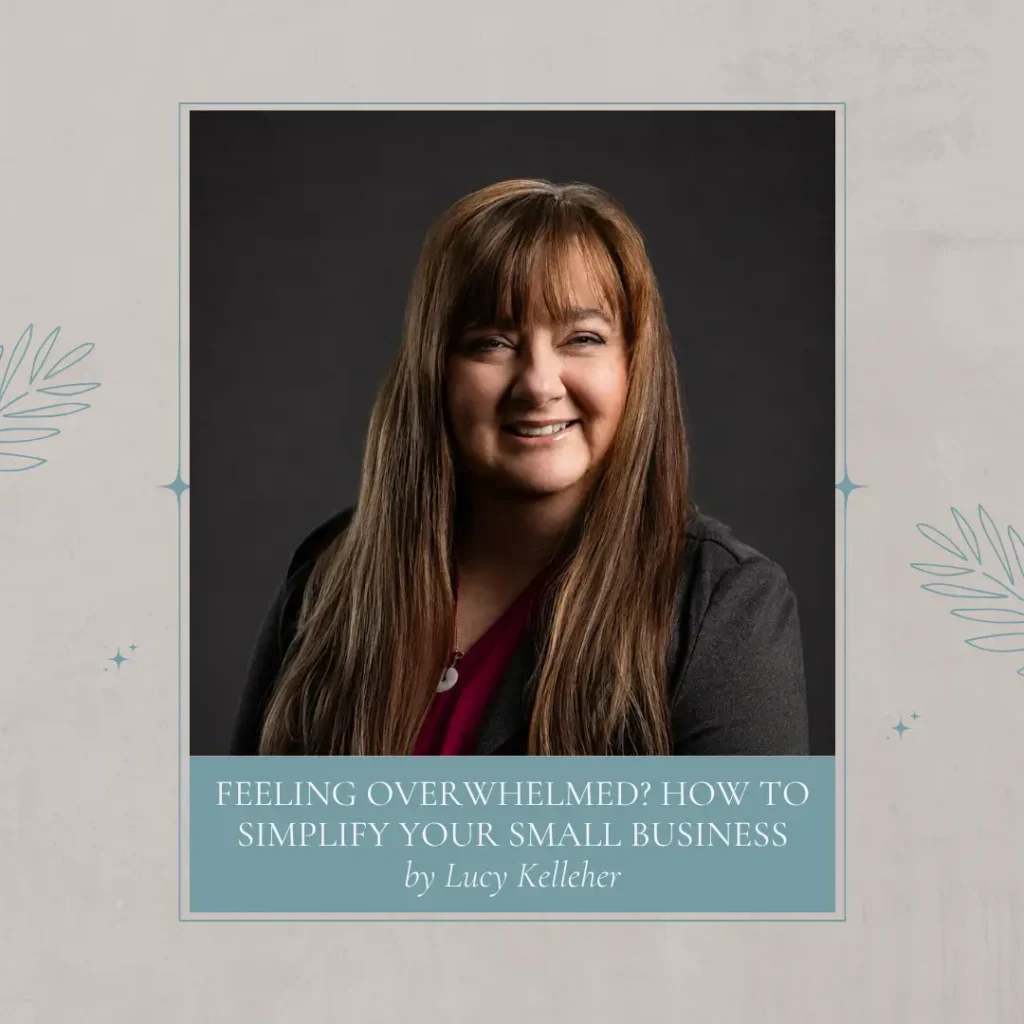

Guest Blog Post by Hera Hub Carlsbad member Lucy Kelleher, Business Growth Strategist and founder of Keep Them Loyal
In honor of Women’s Small Business Month, I want to talk about what to do when running your business starts to feel like too much. I help business owners figure out what to focus on next, and my advice for managing business growth starts with a question most of us skip.
When you first started your business, you were probably doing pretty much everything. You worked with clients, answered emails, handled the marketing, followed up, and kept up with the admin. For a while, that works.
 When everything adds up
But as your business grows, so does everything around it. You add a tool because you need something it does. You create a process to solve a problem. You add an offer, start a newsletter, join another networking group, or try a new way of marketing.
Most of those decisions made sense when you made them. But over time, all those additions can create a lot to manage.
That’s when managing it all starts to mean something different.
Sometimes you need to stop managing and start questioning
When everything feels like a lot, your first instinct is often to find a better way to manage it. Maybe you need a new project management tool, a better calendar, a new CRM, or another automation. Sometimes you do.
But before you add something else, take time to look at your business instead of working in it. To simplify business operations, start by asking:
- What’s working?
- What’s not?
- What’s taking far more time than it should?
- What are you still doing simply because that’s how you’ve always done it?
Your business today isn’t the business you started
As your business grows, you keep adding. What you don’t do nearly as often is go back and subtract.
Something that worked two years ago may not be right for the business you have today. A task that took a few minutes when you had five clients may look very different when you have 25. A process you created when you were doing everything yourself may not work once other people are involved. And a tool you added to make life easier may have quietly become one more thing to manage.
Before you try to manage all of it, ask what you can take away:
- What can you stop doing?
- What could be combined?
- What could be easier?
- What no longer fits where your business is going?
 And then there’s the next problem
Taking things away can give you some breathing room. But it can also make the next problem easier to see.
Once you’ve cleared away some of what doesn’t belong anymore, you may discover just how much of what remains still depends on you.
You’re the one who remembers to follow up. You’re the one who knows how something gets done. You’re the one people come to for the next decision. Maybe the process works, but only because you’re the one keeping it moving.
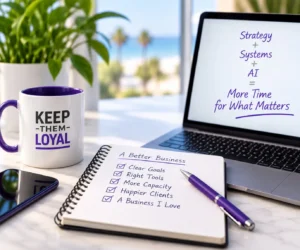
That’s a different problem than having too much to manage, and it may need a different solution. Depending on what you find, you may need:
- A better process
- Something delegated
- A home for information outside your head
- A tool or automation that really would help
The difference is that now you’re solving the right problem instead of adding something else because everything feels like a lot.
Where to start this week
You don’t need a full business overhaul to feel the difference. Pick one area, such as client follow-up, scheduling, or your marketing, and run it through the questions above. Small business efficiency usually improves one clear decision at a time, and a single change you stick with is worth more than a new system you abandon in a month.
The bottom line
Simplifying as your business grows means stepping back long enough to decide what still belongs and see what’s in the way, so the way you run your business can support where you’re going next.
About Lucy
 Lucy Kelleher is a Business Growth Strategist, Hera Hub Carlsbad member, and founder of Keep Them Loyal. She helps business owners figure out what to focus on next and how to move forward. Her work brings together strategy, client relationships, practical systems, and human-first AI to help her clients build businesses that work better for both their customers and their lives.
Email: lucy@keepthemloyal.com
Instagram: @keepthemloyal